When I first started working with the SDI back in the 1990s, I made a mistake that turned into a learning opportunity.
I had an appointment with a senior training officer at a large corporation. She had completed the paper version of the SDI in advance (this was the era of mailing paper assessments and using pencils—how did we survive?). Since I hadn’t seen her results yet, she read her six numbers over the phone, and I plotted them on a laminated SDI triangle on my desk.
She had a Red-Blue MVS with a R-G-B Conflict Sequence. Easy, I thought. I’ve got this.
Everything we talked about regarding her MVS—her drive to find potential in others and challenge them to grow—was spot on. We had great momentum. So, I decided to launch into “expert mode” and describe her Conflict Sequence. Starting with Stage 1 Red, I said things like:
- “You get agitated and confront people.”
- “You attack problems assertively.”
- “You push to get your way.”
There was a long silence. Then she said, “You’ve lost me. I don’t do that at all.”
What Went Wrong?
I had committed the classic rookie error of SDI facilitation. I made behavioral statements. I jumped straight to what I thought she did rather than ask about her motives. Although I didn’t realize it at the time, I also projected my own Stage 3 Red experience onto her Stage 1 Red type, but that’s a topic for another day.
When I asked what she actually did in conflict, she explained that she had worked on herself for years. She had learned to listen carefully, clarify issues, and keep her composure.
That’s when the lightbulb finally went on for me. I said, “Wait. I made a mistake. I told you what you do. I should have asked what you want.” So I asked: “When conflict starts, do you feel a sense of urgency and want immediate action?” She replied, “Yes! But I stop myself because that doesn’t work well with my team.”
As the conversation progressed, we discovered that she was choosing behaviors that looked Blue (accommodating) or Green (analytical) to serve a Red (assertive) motive. She listened to her team because she had found it was the fastest way to resolve the issue. She was still experiencing Stage 1 Red; she was just being relationally intelligent. She was intentionally choosing to deploy strengths during conflict that looked a different “color” than those typically associated with her Red motive—yet they still fulfilled her Red motive.
The Core Principles
This brings us to a couple foundational premises of Relationship Awareness Theory: motives drive behavior, and motives change in conflict. Elias Porter, the original author of the SDI, essentially argued that when we experience conflict (a threat to our sense of self-worth), our motives become defensive. We aren’t just reacting; we are protecting our sense of self-worth. As conflict continues, our defensiveness increases but narrows in scope, triggering changes in motives that result in still different behaviors.
But here is the opportunity for increased effectiveness: The motive is the “why,” and the behavior is the “how.” Although the “why” remains consistent to your personality type, you can change the “how” through self-awareness and practice.
The Three Stages of Conflict Motives
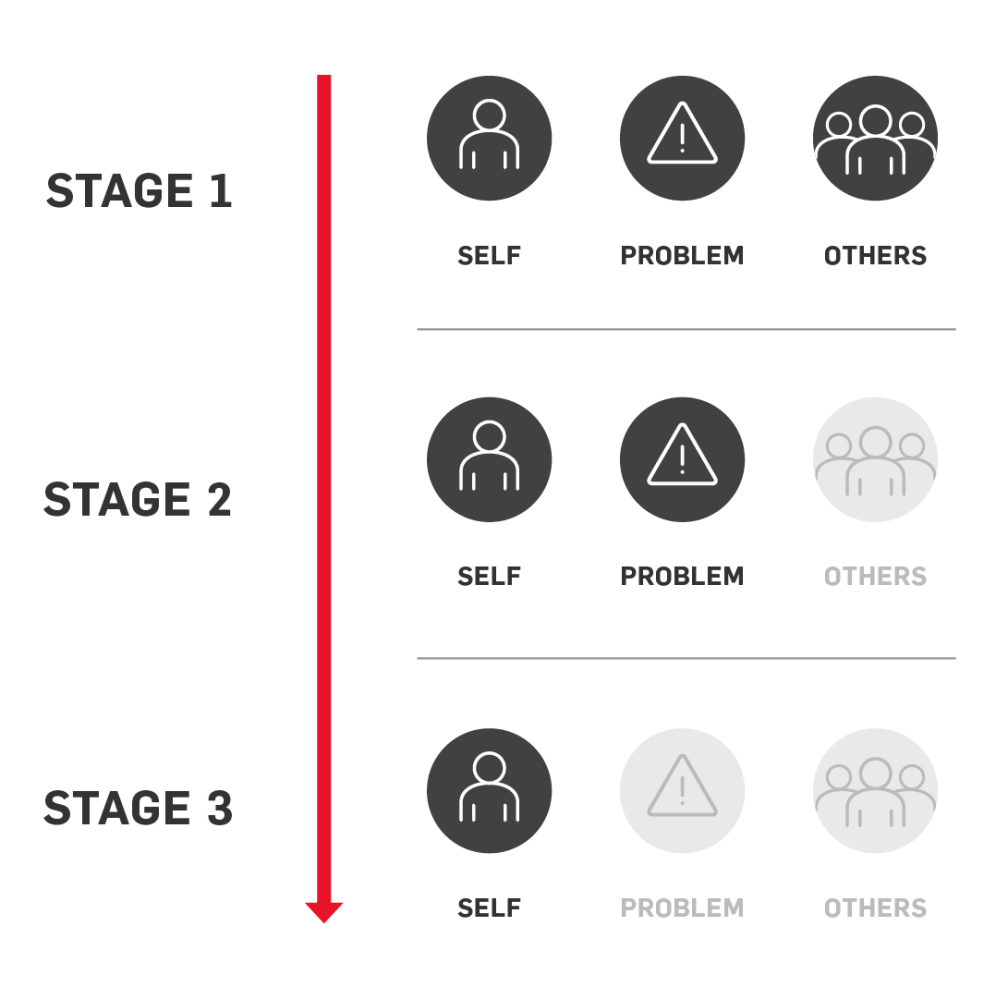
Every Conflict Sequence type describes a series of changes in motives, with the focus narrowing or concentrating in deeper stages. Think of deeper stages of conflict as a heightened defensiveness in response to perceived threats. Don’t make the rookie mistakes of labeling them with behavioral terms, or calling them ulterior motives, or saying that people’s motives degrade or degenerate from one stage to another, or that we get more selfish in deeper stages. Those concepts have nothing to do with the personality types described by the SDI and Relationship Awareness Theory. What happens is a concentration of focus and energy.
Stage 1
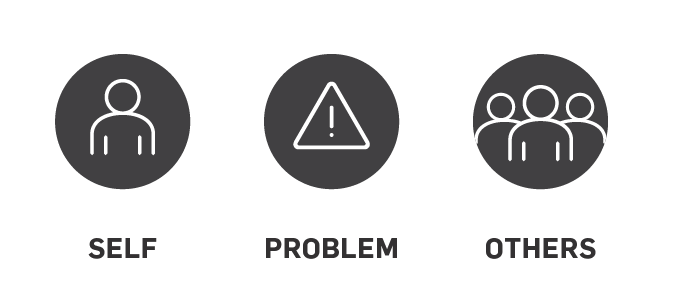
At the initial stage of conflict, we focus on the problem, ourselves, and the other person.
- Blue (Accommodate): the motive is to keep the peace and restore harmony.
- Red (Assert): the motive is to rise to the challenge and take immediate action.
- Green (Analyze): the motive is to be prudently cautious and gather information.
Stage 2
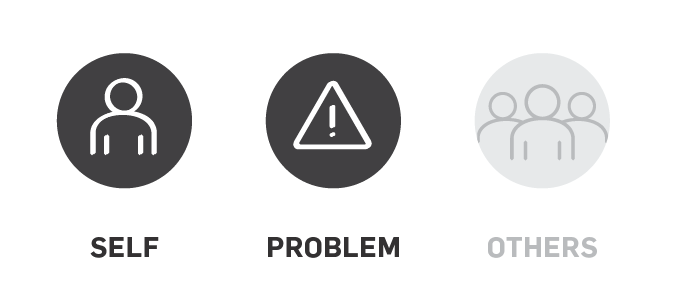
If Stage 1 doesn’t work, we shift to the second stage where we focus mostly on ourselves and the problem.
- Blue: reluctantly willing to give in with conditions.
- Red: reluctantly willing to move quickly and forcefully.
- Green: reluctantly willing to independently reconsider the issue.
Stage 3
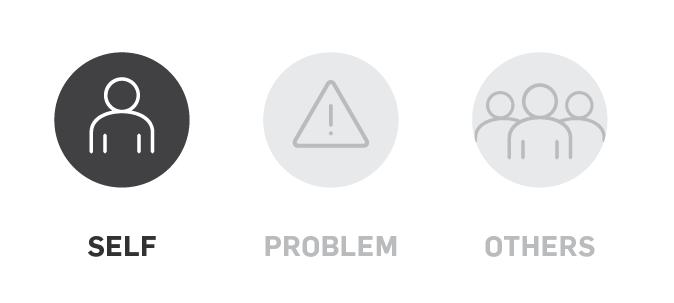
By Stage 3, which is quite rare for most people, the focus is predominantly on oneself. We are defending our dignity or doing whatever it takes to put the issue behind us and move on with the rest of our lives.
- Blue: feeling compelled to surrender or give up.
- Red: feeling compelled to take control or confront.
- Green: feeling compelled to retreat or isolate yourself.
Why This Matters
My learning opportunity with that training officer reminded me that we should never assume we know what a person will do just by looking at their SDI results. The results tell us what they want to do, but they still have choice and agency. A person who is experiencing a Red motive during their conflict sequence might look perfectly calm on the outside while their internal engine is red-lining at 8,500 RPM.
As facilitators, leaders, or just people in any relationship, we should validate the motive, not predict or label the behavior. When you ask someone, “What is your intention?” or “What do you really want?” rather than saying “You are being typical Stage 1 Red aggressive,” you open the door to a productive conversation to resolve the current conflict instead of meandering down the dimly lit hall that leads to a deeper stage of conflict.
Once we understand the motives—the “Why”—we gain the ability to see any number of “Hows.” We become more open to a range of possible behaviors that can express and satisfy the underlying motives. In short, understanding the connection between motives and behavior helps us be more agile in the deployment of our strengths, to develop our relationship intelligence.